Nausea is a common sensation that can range from mildly uncomfortable to debilitating. While there are several factors that can contribute to this unpleasant feeling, one often overlooked player is the vagus nerve. This comprehensive analysis aims to shed light on the role of the vagus nerve in nausea and explore potential therapeutic approaches. It is important to note that the information presented here is for educational purposes only and should not be taken as medical advice. If you are experiencing persistent or severe nausea, it is always advisable to consult with a healthcare professional.
Understanding the Vagus Nerve
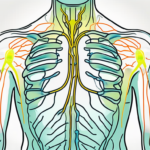
The vagus nerve, also known as the tenth cranial nerve, is one of the longest nerves in the human body. It originates in the brainstem and extends down through the neck and thorax to the abdomen. This vital nerve is responsible for a wide array of functions, including regulating heart rate, controlling breathing, and facilitating digestion.
Did you know that the word “vagus” means “wandering” in Latin? This name perfectly describes the path of the vagus nerve as it meanders through the body, connecting various organs and systems. Its extensive reach allows it to have a profound impact on our overall well-being.
Anatomy and Function of the Vagus Nerve
The vagus nerve is composed of both sensory and motor fibers. The sensory fibers transmit signals from various organs back to the brain, allowing us to perceive sensations such as taste, touch, and pain. These signals provide us with valuable information about our environment and help us navigate through the world.
On the other hand, the motor fibers carry instructions from the brain to the muscles and organs, enabling them to perform their respective functions. Without the vagus nerve, our bodies would struggle to carry out essential tasks like breathing, digesting food, and maintaining a steady heart rate.
When it comes to digestion, the vagus nerve plays a crucial role in regulating the movement of food through the gastrointestinal tract. It coordinates the contractions of the smooth muscles in the esophagus, stomach, and intestines, ensuring that food is properly broken down and absorbed.
But that’s not all! The vagus nerve also communicates with the brain to initiate the release of enzymes and gastric acid, which aid in the digestion process. This intricate connection between the brain and the digestive system highlights the importance of the vagus nerve in maintaining a healthy gut.
The Vagus Nerve’s Role in the Autonomic Nervous System
The vagus nerve is a key player in the autonomic nervous system, which controls involuntary bodily functions. It is part of the parasympathetic division of this system, often referred to as the “rest and digest” response. When the vagus nerve is activated, it promotes relaxation, lowers heart rate, and stimulates digestion.
Imagine yourself in a serene environment, surrounded by nature’s beauty. As you take in the fresh air, your heart rate slows down, and you feel a sense of calmness washing over you. This calming effect is partly due to the activation of the vagus nerve, which helps your body enter a state of rest and rejuvenation.
In addition to its role in relaxation, the vagus nerve also influences our emotional well-being. It is involved in regulating our mood, reducing anxiety, and promoting feelings of contentment. When the vagus nerve is functioning optimally, it helps us navigate the ups and downs of life with greater ease.
Furthermore, the vagus nerve has been found to play a role in inflammation control. It has anti-inflammatory effects that help keep our immune system in balance. By modulating the release of inflammatory molecules, the vagus nerve acts as a natural regulator, preventing excessive inflammation and promoting healing.
As you can see, the vagus nerve is a remarkable part of our anatomy, with far-reaching effects on our physical and emotional well-being. Its intricate connections and multifaceted functions make it a fascinating area of study for researchers and medical professionals alike.
The Vagus Nerve and Nausea Connection
Research has shown that the vagus nerve is closely linked to the occurrence of nausea. By understanding the mechanisms by which the vagus nerve influences gastrointestinal function, we can gain insights into how it contributes to the development of nausea. It is important to note that while the vagus nerve may play a role in nausea, it is not the sole cause. Various other factors, such as psychological and hormonal factors, can also contribute to the sensation.
How the Vagus Nerve Influences Gastrointestinal Function
The vagus nerve, also known as the “wandering nerve,” communicates with various parts of the digestive system, including the stomach, small intestine, and colon. This nerve acts as a crucial link between the brain and the gut, allowing for bidirectional communication. When the vagus nerve is activated, it stimulates the release of digestive enzymes, increases blood flow to the digestive organs, and enhances the absorption of nutrients. This intricate network of communication ensures that the digestive system functions optimally.
However, if the vagus nerve becomes overly active or hypersensitive, it can lead to disruptions in gastrointestinal function, potentially resulting in nausea. For example, when the vagus nerve is excessively stimulated, it can cause the stomach to contract more forcefully than necessary, leading to a feeling of discomfort and queasiness. Additionally, an overactive vagus nerve can trigger the release of excessive amounts of digestive enzymes, which may further contribute to feelings of nausea.
The Neurological Pathway: From Vagus Nerve to Nausea
While the exact neurological pathway linking the vagus nerve to nausea is still not fully understood, researchers believe that it involves the activation of certain brain regions, such as the nucleus tractus solitarius and the area postrema. These regions are involved in the regulation of vomiting reflexes and the processing of nauseogenic signals.
When the vagus nerve detects potential threats or irritants in the gastrointestinal system, it sends signals to these brain regions, alerting the body to the possibility of nausea and vomiting. The nucleus tractus solitarius acts as a relay station, receiving information from the vagus nerve and transmitting it to other areas of the brain responsible for coordinating the appropriate response.
The area postrema, also known as the “vomiting center,” is particularly important in the development of nausea. It receives signals from the nucleus tractus solitarius and integrates them with other sensory information, such as visual and olfactory cues. This integration allows the brain to determine whether the sensation of nausea is warranted and, if so, to initiate the appropriate physiological response, such as vomiting.
It is worth noting that the vagus nerve’s influence on nausea is not limited to its role in gastrointestinal function. This nerve also has connections to areas of the brain involved in emotion regulation, stress response, and the perception of pain. These additional connections may help explain why psychological and hormonal factors can also contribute to the sensation of nausea.
In conclusion, the vagus nerve plays a significant role in the occurrence of nausea. Its intricate connections to the digestive system and various brain regions allow for the coordination of gastrointestinal function and the processing of nauseogenic signals. By further understanding the mechanisms underlying the vagus nerve’s influence on nausea, researchers can develop more targeted treatments for individuals experiencing this unpleasant sensation.
Scientific Theories Behind Vagus Nerve Stimulation and Nausea
Vagus nerve stimulation has gained significant attention as a potential therapeutic approach for various conditions, including epilepsy and depression. When it comes to nausea, several theories have emerged regarding how vagus nerve stimulation could alleviate this unpleasant sensation.
The Role of Neurotransmitters
One theory suggests that vagus nerve stimulation affects the balance of neurotransmitters in the brain, such as serotonin and dopamine. These neurotransmitters play a crucial role in regulating mood and emotions, and their dysregulation has been associated with nausea and vomiting.
Research has shown that serotonin, often referred to as the “feel-good” neurotransmitter, is involved in the regulation of nausea and vomiting. When serotonin levels are disrupted, it can lead to an increased sensitivity to triggers that induce nausea. By stimulating the vagus nerve, it is believed that the release of serotonin can be modulated, potentially reducing the occurrence and severity of nausea.
Dopamine, on the other hand, is known for its role in reward and pleasure. It has been suggested that vagus nerve stimulation may influence the release of dopamine, which could have an impact on the brain’s perception of nausea. By enhancing dopamine activity, vagus nerve stimulation may help alleviate the discomfort associated with nausea.
The Impact of Stress on the Vagus Nerve
Stress is known to have a profound impact on the body, including the activation of the sympathetic nervous system, which opposes the parasympathetic activity of the vagus nerve. By modulating the vagus nerve, it is hypothesized that vagus nerve stimulation could help restore the balance between the two systems, potentially reducing the occurrence of stress-induced nausea.
When the body is under stress, the sympathetic nervous system prepares it for a fight-or-flight response, diverting resources away from non-essential functions such as digestion. This can lead to a variety of gastrointestinal symptoms, including nausea. By stimulating the vagus nerve, which is responsible for promoting rest and relaxation through its parasympathetic activity, vagus nerve stimulation may counteract the effects of stress on the body and alleviate nausea.
Furthermore, stress is known to trigger the release of stress hormones, such as cortisol, which can further disrupt the balance of neurotransmitters in the brain. By modulating the vagus nerve, vagus nerve stimulation may help regulate the release of stress hormones, reducing their impact on the body and potentially alleviating stress-induced nausea.
Therapeutic Approaches to Vagus Nerve-Induced Nausea
While vagus nerve stimulation holds promise as a potential therapeutic approach for nausea, it is important to note that more research is needed to fully understand its effectiveness and safety. Additionally, clinical interventions should be conducted under the guidance of medical professionals.
Non-Invasive Vagus Nerve Stimulation Techniques
Non-invasive vagus nerve stimulation techniques have emerged as a less invasive alternative to traditional invasive methods. These techniques involve the application of mild electrical impulses to the skin, stimulating the vagus nerve indirectly. The electrical impulses can be delivered through devices such as transcutaneous electrical nerve stimulation (TENS) units or auricular vagus nerve stimulation (aVNS) devices.
Early studies have shown promising results with non-invasive vagus nerve stimulation techniques in managing nausea. For example, a study published in the Journal of Clinical Gastroenterology found that aVNS significantly reduced nausea and vomiting in patients undergoing chemotherapy. Another study published in the journal Neurogastroenterology and Motility reported that TENS reduced nausea and improved gastric emptying in patients with gastroparesis.
However, further research is needed to establish the long-term efficacy and safety of non-invasive vagus nerve stimulation techniques. It is also important to determine the optimal parameters, such as frequency and intensity of the electrical impulses, for different patient populations and conditions.
Medicinal Interventions and Their Effectiveness
Several medications are used to alleviate nausea, targeting various receptors and pathways in the body. Some of these medications indirectly affect the vagus nerve by modulating neurotransmitter activity or blocking certain receptors.
One commonly used medication for nausea is ondansetron, which is a selective serotonin receptor antagonist. It works by blocking serotonin receptors in the gut and the brain, reducing nausea and vomiting. Another medication, metoclopramide, enhances the motility of the gastrointestinal tract and reduces nausea by blocking dopamine receptors.
While these medications can be effective in managing nausea, it is important to consult with a healthcare professional before starting any medication. They can provide guidance on the appropriate medication based on the underlying cause of nausea and the individual’s medical history. It is also essential to understand the potential side effects and drug interactions associated with these medications.
In addition to medications, other approaches such as dietary modifications and relaxation techniques may also be recommended to manage vagus nerve-induced nausea. For example, avoiding trigger foods and eating smaller, more frequent meals can help reduce symptoms. Relaxation techniques such as deep breathing exercises and mindfulness meditation can help alleviate stress and promote overall well-being, which may indirectly improve nausea symptoms.
In conclusion, while vagus nerve stimulation and medicinal interventions show promise in managing nausea, further research is needed to fully understand their effectiveness, safety, and optimal application. It is crucial to consult with healthcare professionals to determine the most appropriate therapeutic approach for individual cases of vagus nerve-induced nausea.
Future Research Directions
The study of the vagus nerve’s impact on nausea is still an area of ongoing research, and there are several exciting avenues for exploration.
Potential Developments in Vagus Nerve Stimulation
Advancements in technology and research may lead to the development of more targeted and personalized vagus nerve stimulation techniques. This could potentially improve treatment outcomes and minimize side effects.
One potential development in vagus nerve stimulation is the use of bioelectronic devices. These devices, such as implantable microchips, can deliver precise electrical impulses to specific branches of the vagus nerve. By targeting specific areas of the nerve, researchers hope to achieve more precise control over the nerve’s activity and its impact on nausea.
Another area of potential development is the use of non-invasive vagus nerve stimulation techniques. Currently, most vagus nerve stimulation methods require surgical implantation of electrodes. However, researchers are exploring non-invasive alternatives, such as transcutaneous vagus nerve stimulation, which involves applying electrical impulses to the skin overlying the vagus nerve. This approach could make vagus nerve stimulation more accessible and reduce the risks associated with surgery.
Unanswered Questions in the Field
Despite the progress made in understanding the connection between the vagus nerve and nausea, there are still many unanswered questions. Future studies may focus on elucidating the specific mechanisms through which the vagus nerve influences nausea and identifying novel therapeutic targets.
One unanswered question is whether the vagus nerve’s impact on nausea is solely through its effects on the gastrointestinal system or if there are additional pathways involved. While it is well-established that the vagus nerve plays a role in regulating digestive processes, recent research suggests that it may also interact with other brain regions involved in nausea, such as the area postrema in the brainstem. Further investigation is needed to fully understand the complex network of interactions between the vagus nerve and the brain regions involved in nausea.
Another unanswered question is the role of inflammation in the vagus nerve’s impact on nausea. Inflammation is known to play a role in various gastrointestinal disorders, and recent studies have shown that the vagus nerve can modulate the inflammatory response. It is unclear, however, how inflammation specifically affects the vagus nerve’s influence on nausea. Future research could explore the relationship between inflammation, the vagus nerve, and nausea to uncover new therapeutic approaches.
In conclusion, the vagus nerve plays a significant role in the occurrence of nausea. Understanding its anatomy, function, and connection to the gastrointestinal system provides valuable insights into the mechanisms behind nausea. While vagus nerve stimulation shows promise as a therapeutic approach, more research is needed to establish its efficacy and safety. As always, it is important to consult with a healthcare professional for appropriate diagnosis and personalized treatment options for nausea.
If you’re fascinated by the critical role the vagus nerve plays in managing nausea and your overall health, delve deeper with the “My Vagus Nerve & Me Book.” This comprehensive guide will take you on an enlightening journey through the complexities of one of the most vital systems in your body. Discover the intricate functions of the vagus nerve, from regulating your heart rate and digestion to its involvement in your immune system and mental health. Learn both natural and artificial methods to stimulate this powerful nerve for better well-being. Ready to unlock the secrets of your vagus nerve and enhance your quality of life? Get My Vagus Nerve & Me eBook today and take the first step towards harnessing the power of your body’s internal communication network.